Sriwhana Spong wins Waikato National Contemporary Art Award
Written by
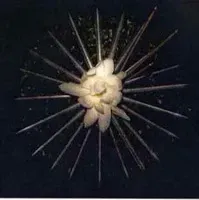
Sriwhana Spong has been chosen as the winner of the 2005 Trust Waikato National Contemporary Art Award for her video work Nightfall.
Judge Heather Galbraith is the first to present the award for a video work.
'Video is an incredibly important medium for contemporary artists with a history of over thirty years of experimentation - the selection of video in this year's entries was particularly strong.' says Galbraith
Image: Video still from Sriwhana Spong's Nightfall (2005)
Sriwhana Spong has been chosen as the winner of the 2005 Trust Waikato National Contemporary Art Award for her video work Nightfall.
Judge Heather Galbraith is the first to present the award for a video work.
'Video is an incredibly important medium for contemporary artists with a history of over thirty years of experimentation - the selection of video in this year's entries was particularly strong.' says Galbraith
Image: Video still from Sriwhana Spong's Nightfall (2005)
Galbraith describes the work as 'haunting and mesmerising, taking us on a nocturnal journey around a garden, where torchlight stumbles across and illuminates exquisite assemblages on the ground'
The work, set to Cat Steven's 'Here Comes My Baby', elicits flashbacks to cinematic experiences from The Blair Witch Project, to David Lynch's films 'Blue Velvet' and 'Twin Peaks'.
For her achievement, Spong receives a $10,000 prize and recognition as one of New Zealand's top contemporary artists.
Spong's work and that of the other 44 award finalists are available for public viewing until 24 October at the Waikato Museum. The public will also have the opportunity to submit reviews of the artists' work. These reviews will be published in the Waikato Times over the course of the exhibition.
Art Award committee chairperson Rosie Morrison says the public review process is a valued aspect of the art awards.
'It is important that people feel comfortable expressing their opinion on the art works, whatever that opinion may be. This open review gives the public an opportunity to have their say and feedback gained through this is a great addition to the award process.'
After much difficult consideration, I would like to award the 2005 Trust Waikato National Contemporary Art Award to Sriwhana Spong for her video work 'Nightfall'.
This haunting, mesmerising work takes us on a nocturnal journey around a garden, where torchlight stumbles across and illuminates exquisite votive assemblages on the ground and suspended from trees made from fruit, ribbon, incense sticks, golden vegetation, lit cigarettes and garlands of popcorn.
The work, set to a laconic aberration of Cat Steven's 'Here Comes My Baby', elicits flashbacks to cinematic experiences from The Blair Witch Project, to David Lynch's films 'Blue Velvet' and 'Twin Peaks'. Her statement makes a clear reference to a cinematic influence or counterpoint - Wes Craven's thriller/horror 'Nightmare on Elm Street'. She presents us with dialogue between a couple where they are talking about 'a Balinese way of dreaming', whereby you experience and 'own' a bad dream; you relinquish yourself to it for what productive creative outcome it might be a catalyst for, a poem or a song. This is a beautiful notion, but one that is subject to a Western presumption or expectation of South East Asian exoticism and ritualised domestic life. This video de-stabilised as well as captivates. The camera is unsteady, the illumination fleeting, the journey is unexpected. A dark premise gives way to a heady and beguiling experience.
Overall the standard of work this year was incredibly high and as tempted as I was to split the prize, I wanted to ensure that this generous award gave a single artist a real and significant break - whether that manifests as direct focus on their practice, more time in the studio, a purchase of materials and equipment or paying off some of the debt that most artists live in the constant shadow of.
This is the first time that the award has been given to a video work. Video is an incredibly important medium for contemporary artists (with a history of over thirty years of experimentation). Reluctance to accepting it as a 'legitimate' art work has fortunately waned and video work is regularly seen in public galleries, artist-run spaces and is part of public and private collections. The selection of video in this year's entries was particularly strong.
Heather Galbraith
Contact 021 052 6058 for comment