TBI Q&A: Deborah Lawler-Dormer
Written by
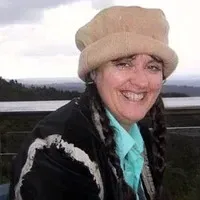
Deborah Lawler-Dormer is Director of Auckland's newly relaunched MIC Toi Rerehiko Media and Interdisciplinary Arts Centre, formerly known as the Moving Image Centre. MIC Toi Rerehiko is leading the way in evolving a mixed-income organisational model, away from exclusive dependency on government funding. Deborah's leadership attracted a grant of $650,000 from ASB Trust last year, and she has also just been named as a participant in the Creative Entrepreneur ART Venture programme.Deborah Lawler-Dormer is Director of Auckland's newly relaunched MIC Toi Rerehiko Media and Interdisciplinary Arts Centre, formerly known as the Moving Image Centre. MIC Toi Rerehiko is leading the way in evolving a mixed-income organisational model, away from exclusive dependency on government funding. Deborah's leadership attracted a grant of $650,000 from ASB Trust last year, and she has also just been named as a participant in the Creative Entrepreneur ART Venture programme.What time of day do you feel most inspired?
Whenever I get clear quiet thinking time (rare) or the middle of the night.
Can you describe an evolution in the way your work from your childhood play to the present day?
Pure childhood play was sporadic and as an adult play is an important part of my practice. Present day is based upon celebrating play and giving it as much opportunity as possible - whether as an artist experimenting, as an audience engaging or with family at home.
How would a good friend describe your aesthetic?
Thoughtful, experimental.
Where do you get your news from?
During the week, internet/newsgroups. Rarely get home in time for the evening news. Sometimes weekend newspapers.
What's your secret for multi-tasking?
I have an innate capacity for multi-tasking. Keep an eye on the strategic vision and not get too buried in details to the point where you lose sight of where you are going and getting a great team inspired on the projects so there are more hands and more ideas.
What is your earliest memory of fruit?
Picking blackberries on the roadside in Bowentown.
What has moving image got over any other creative form?
I don't see a competitive relationship between art forms. Good art is inspirational/transformative no matter what form it takes. Moving image does incorporate many art forms - sound, cinematography, script, editing, acting, costume etcetera so it is a richly creative and collaborative art form.
You are given a piece of string, a stick and some fabric. What do
you make?
A basic animal puppet - maybe a leopard ... what colour is the fabric?
It's been big ch-ch-ch-changes at MIC, starting with a new name and new premises including the purchase of Galatos nightclub venue. Let's get straight to it - how did you convince funding agency ASB Trust to see MIC's potential rather than the business as usual?
Through presenting on paper and in person a clear vision with clear community, artistic and cultural outcomes. Good business planning and risk management. Galatos is a multidisciplinary performance venue and as such is an important cultural and community asset. Also - assembling a group of advocates who knew of the work we do and the artistic outreach and having a fantastic development consultant on board - Barbara Procter (who is now MIC's General Manager).
How does the Maori phrase Toi Rerehiko extend our understanding of what MIC is today?
Rachael Rakena created this Maori phrase - Toi Rerehiko - to express digital art, and gifted it to MIC last year. She defines Toi Rerehiko as art that employs movement with electricity and flashes of light - that which flies settling momentarily, but leaving no object. It subsequently encompasses many art forms, such as music, film and performance, which are time based and leave no permanent physical residue.
In addition we were wanting a name that will help redefine this art form and acknowledge the last ten years of immense change with the impact of digital technology and a name that led the way for the next ten that will be inevitably the same fast-paced journey. As such this name suggests a fluidity that is able to stretch and encompass the unknown futures of the media. Our chair Ian Wedde described it as "an intense poem in two words".
What is the most interesting aspect of your role as Director of MIC Toi Rerehiko?
The engagement with the many people I come in to contact with on a daily basis, and the strategic challenge of keeping a complex vision intact.
What project at MIC has done the most to propel short film into New Zealand public consciousness?
The Homegrown short film programmes for the New Zealand Film Festival for the last ten years, as they tour the country for five months of the year and are seen by vastly different audiences.
Tell us about the new Creative Media Lab joint venture with AUT. What's the goss there?
We are developing a creative technologies research lab to facilitate structured creative projects between artists, education, industry bodies and commercial communities. The Creative Technologies Laboratory will focus on the innovative use of converging technologies in high growth sectors including: Mobile Phone Technologies; Live Performance, Interactivity and Spatial Technologies; Sound and Image Technologies.
The opportunity gives capacity for many projects from conferences, residencies, new product development and publishing projects and will see MIC Toi Rerehiko's two venues - the gallery at 321 K Rd and Galatos - as places in which experimentation, testing, staging and discussion around these projects can take place. It is in the early development phase at the moment but is rapidly gaining support.
If you could go back and choose a career path completely different to the one you've chosen, what would it be?
A full-time artist.
Are you a global thinker or a details thinker?
Global with the capacity for detail.
What makes Aotearoa so good?
Natural beauty, staunchly innovative people and rich, deep cultural interchanges.
What's the best way to listen to music, and why?
Any time. Any where. Preferably through a good sound system. I like different listening experiences - alone in the dark, driving, dancing, outdoor ampitheatres, pristine auditoriums, crowded energised sweaty clubs ... and more.
What place is always with you, wherever you go?
Taupiri Bay, Northland.
What are you afraid of regarding the future?
Death - though hopefully a passing fear ;)
What's great about today?
Having the gift of another day ... and my first cup of tea on the deck in the sun was gorgeous - listening to the birds and seeing the first rose to flower in my new house.
Interview by Jacquie Clarke
10/4/07