TBI Q&A: Kathy Dudding
Written by
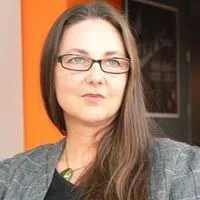
Filmmaker and video artist Kathy Dudding's first feature length film The Return is a poetic portrait of Wellington, contrasting present day and archival footage of the city from the early 20th century.
The experimental documentary combines Kathy's interest in found footage, video installation art, documentary and her writing practice.
"Central to my work is the combination of image and text. Sometimes the text is dominant, at others it's the imagery that takes centre stage. I am interested in the different ways this image/text dialectic can be expressed whether through an experimental film or a more sculptural video art work."
The Return screens at the 37th Wellington Film Festival at the Film Archive on Friday, July 25.
Filmmaker and video artist Kathy Dudding's first feature length film The Return is a poetic portrait of Wellington, contrasting present day and archival footage of the city from the early 20th century.
The experimental documentary combines Kathy's interest in found footage, video installation art, documentary and her writing practice.
"Central to my work is the combination of image and text. Sometimes the text is dominant, at others it's the imagery that takes centre stage. I am interested in the different ways this image/text dialectic can be expressed whether through an experimental film or a more sculptural video art work."
The Return screens at the 37th Wellington Film Festival at the Film Archive on Friday, July 25.
During what hours of the day do you feel most inspired?
I'm a self-confessed early-bird rather than a night owl. I love working during the pre-dawn period.
How would a good friend describe your aesthetic or style?
Eclectic.
What aspect of your creative practice gives you the biggest thrill?
Filming with my HD video camera and editing at home in Final Cut Pro. And the premiere screening of my work.
How does your environment affect your work?
The two are intertwined. I'm certainly susceptible to my environment, and acknowledge aspects of the Cinema of Unease in some of my work.
Do you like to look at the big picture or focus on the details?
It depends on the medium I am working in. For example a film is able to include both the macro and the micro. With video installation it is the finer details that are focussed on.
What's your number one business tip for surviving (and thriving) in the creative industries?
Always strive for experimentation and contribute to the vitality of the genre you are working in. The business bit will follow.
Your practice seems to skirt a lot of different mediums. How do they all fit in together?
Central to my work is the combination of image and text. Sometimes the text is dominant, at others it's the imagery that takes centre stage. I am interested in the different ways this image/text dialectic can be expressed whether through an experimental film or a more sculptural video art work.
There's also an identifiable sense of family in your work, where do you think this stems from?
I heard Tracy Moffatt speak years ago when she screened her feature film here and she advised opening the closet and getting out those family skeletons as a good place to start.
You work at the Film Archive in Wellington, how has this influenced your film making?
First I have to say that being at the Film Archive is like working in a lolly shop for a sweet-tooth! I have watched a few thousand home movies and experimental films in the past two/three years and this influenced my creation of works such as the video installation I made last year 'This is not a family album'. I had begun this work when completing my Master of Fine Arts but watching hours and hours of Amateur film regularly for my day job definitely fed into the final work.
Which of your projects to date has given you the most satisfaction?
My film 'The Return' screening in the Film Festival this year. It combines all my skills from cinematography, to writing, editing...and is my first feature length film.
Who or what has inspired you recently?
I saw a great Chinese documentary in the Film Festival the other day: 'Useless'. It showed in three separate parts, three facets of the Chinese clothing industry: the sweat shop; the high-flying designer whose work was shown in the Paris prêt-à -porter show; and a country tailor. The camera was truly a 'fly-on-the-wall' and the finer details of the everyday in those three different worlds was absolutely intriguing.
If you could go back and choose a completely different career path to the one you've chosen, what would it be?
Part of me wants to say that I would have studied film and fine art when I first left school instead of leaving it until recently but then I probably would have ended up in a different place (albeit without a student loan). So in a way I'm glad I chose a more round-about way of getting here.
What place is always with you, wherever you go?
Paris. I lived there in my early 20s and I consider it my spiritual home.
What's the best way to listen to music, and why?
Going to a concert - there's nothing more thrilling than a live performance and the ambience of a room/concert hall filled with expectancy and appreciation.
You are given a piece of string, a stick and some fabric. What do you make?
I tie the stick to the string and dangle it in front of kitten, and the fabric I use to cover a box for its bed. This is a fantasy cos I live in an apartment block where animals are not allowed.
What's the best stress relief advice you've ever been given?
Take an overseas holiday.
What's great about today?
The Film Archive cafe is buzzing with Film Festival goers and I keep bumping into friends.
What's your big idea for 2008?
An essay film project looking at the Wabi Sabi of the Asylum.
The Return screens at the 37th Wellington Film Festival, at the Film Archive, corner of Vivian and Taranaki streets, 12.15pm and 1.30pm, Friday, July 25.
Feature: New Zealand International Film Festivals
22/07/08