The lost world of Te Rauparaha
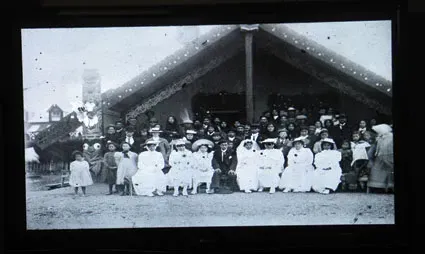
Underneath Plimmerton railway station is a site of significance, where a fearsome chief once lived and reigned supreme.
But today there is no trace of Taupo Pa, once the heart of Ngati Toa and home of Te Rauparaha.
The pa was abandoned shortly after British troops captured Te Rauparaha in 1846. The wooden palisades rotted away and now only memories remain.
Underneath Plimmerton railway station is a site of significance, where a fearsome chief once lived and reigned supreme.
But today there is no trace of Taupo Pa, once the heart of Ngati Toa and home of Te Rauparaha.
The pa was abandoned shortly after British troops captured Te Rauparaha in 1846. The wooden palisades rotted away and now only memories remain.
Pataka Museum is putting on a tour on March 27 as part of the Pa of Porirua 1830-1850 exhibition at Pataka till June 5.
Historian Linda Fordyce will scrape away the sands of time and tell the stories of those who lived at Ngati Toa pa and villages that dotted the Porirua coastline and harbours between 1830 and 1850.
"Following the first footprints is what it's all about," she says. "It's going to take a great deal of imagination to bring the past to the fore. You're standing where others have stood before, where quite important events in our city's history have been."
The iwi migrated with muskets in hand from Waikato in the 1820s with chiefs, including Te Rauparaha, leading bloody battles along the way. Today only two settlements remain – Takapuwahia in Elsdon and Hongoeka north of Plimmerton – out of 12 pa or villages in the exhibition.
Mrs Fordyce will tell how Taupo was also the home of missionaries and how it was unfortified till Te Rauparaha was seized.
She will tell stories of what is lying beneath Ngatitoa Domain, the site of Paremata Pa, which was founded by senior tohunga (priest) Nohorua.
It was the home of the first European settler in the area, Joseph Thoms, who recruited Maori to help with his whaling operation. He went on to marry Nohorua's daughter and signed the Treaty of Waitangi as his father-in-law's witness, so the story goes.
And she will delve into what lies beneath the south coast from Titahi Bay, where Bridge Pa, also known as Komanga-Rautawhiri, was built.
It's here that Kupe, said to be the first Polynesian to discover New Zealand, landed, Mrs Fordyce said.
"You can go back 1000 years in Porirua and we can look at where Kupe landed and made the first footprints in Aotearoa."