Artswire: A few things to keep on your radar in 2026
We’re back and busier than ever!
Not only is it 2026, but it's February, so truly time to stare down the barrel of the new year and prepare to make the best of it. The previous two new years have had me hoping for “a more chill year”. This time I did not pin my hopes on the impossible. There is going to be significant chaos carnage change in 2026. But there is also going to be big exciting things we should enjoy and celebrate. Here’s a handful of things to prepare for and anticipate.
Big funding successes and failures
Between June and September, the results from the first round of the CNZ Arts Organisations and Groups Funding – the new longer-term funding model for arts organisations – will be announced. The stakes are existential for many arts organisations, a new model means uncertainty, and CNZ expects high demand. We can only wait and see who will and won’t be funded, and at what levels. Of course the results follow on from other dates coming up soon in the arts calendar – the first tiers of applications open on Monday (9 February). If you’re involved in an application we have published almost everything you need to know about the fund straight from Claire Murdoch, Senior Manager Arts Development Creative New Zealand Toi Aotearoa.
The return of our national pavilion at the Venice Biennale!
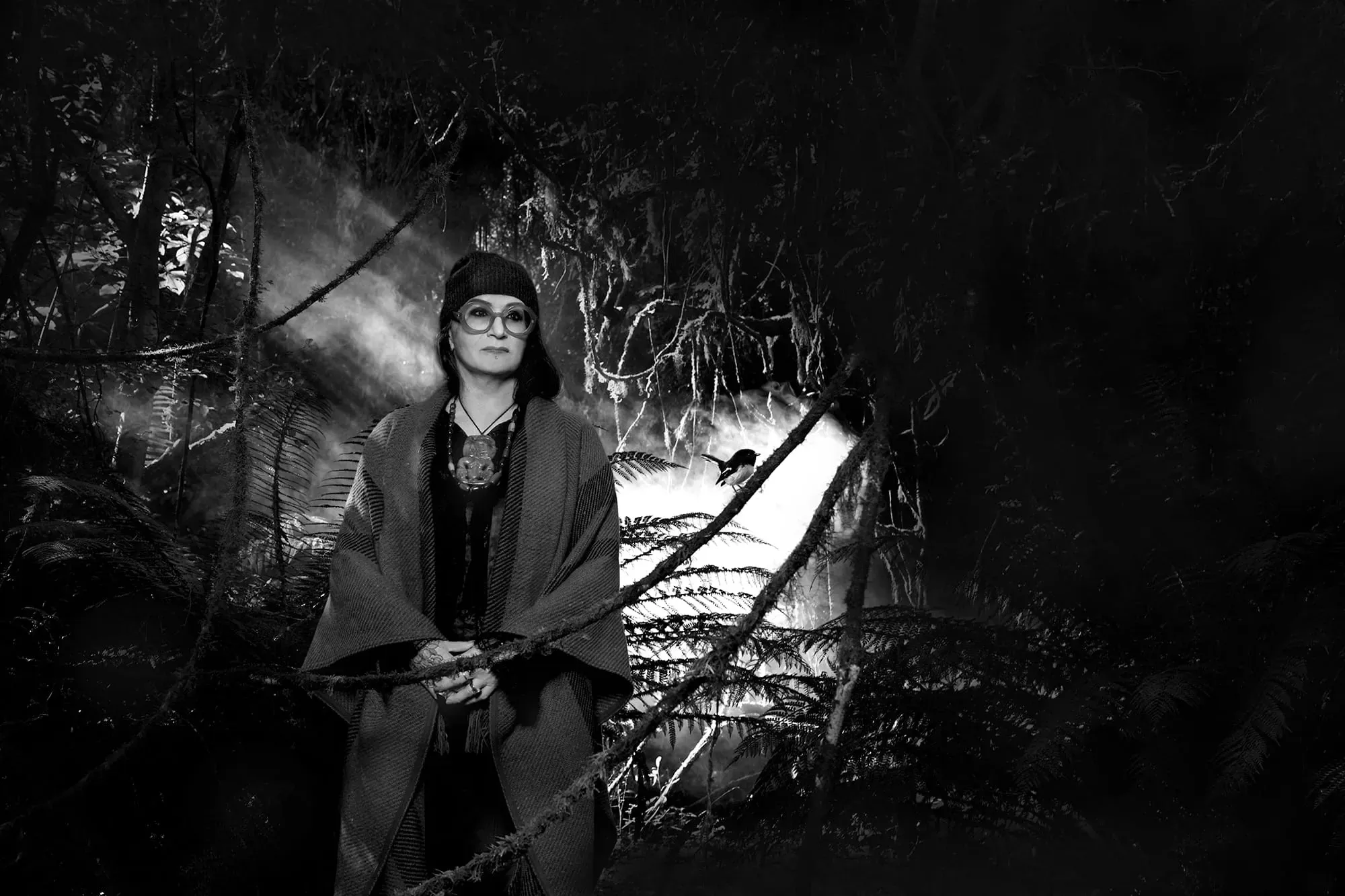
New Zealand’s stand-alone national pavilion will be back after a break in 2024, and it will be filled with the work of Fiona Pardington (Kāi Tahu, Kāti Mamoe, Ngāti Kahungunu, Clan Cameron of Erracht) come May. The major new exhibition is titled Taharaki Skyside and builds on her 2024 series Te taha o te rangi, ‘the edge of the heavens’, photographs of taxidermy specimens of Aotearoa’s birds in museum collections. “Taxidermy occupies a unique space between love, death, and fetish,” she says. “Birds can symbolise familial love, romantic attachment, ecological warnings, they can be intimations of mortality, and in my work they can also represent individual people in my life. The ideas I am conjuring remind us of the integral significance of manu within te ao Māori – as sources of food and materials, and intermediaries between human and divine worlds”.
Major reform of the Copyright Act
The last significant review of the Copyright Act was in 2004 – the year that Facebook and Gmail were launched. The Government launched a long-term staged review of the Copyright Act in 2017, and the Ministry of Business, Innovation and Employment released the first stage of public consultation on the copyright regime in 2018. Last year the Amplify strategy was clear that “the creative and cultural sectors’ attempts to modernise and innovate should not be hampered by outdated legislation, some of which does not account for the modern technologically driven environment”. Announcements on law changes are expected this year. They will affect the rights and intellectual property of all artists – hopefully for the better. Some of the big questions are around how the law will, or won’t, protect creative work being mined by AI.
Budget 2026
Will the government decide to put any money behind the Amplify strategy? Will there be more cuts and more belt-tightening – and if so, where? We will likely find out in May or June.
Aotearoa NZ Festival of the Arts
It's starting later this month in Wellington and the programme is vast. So many things to see!
The second half of Amplify’s first phase
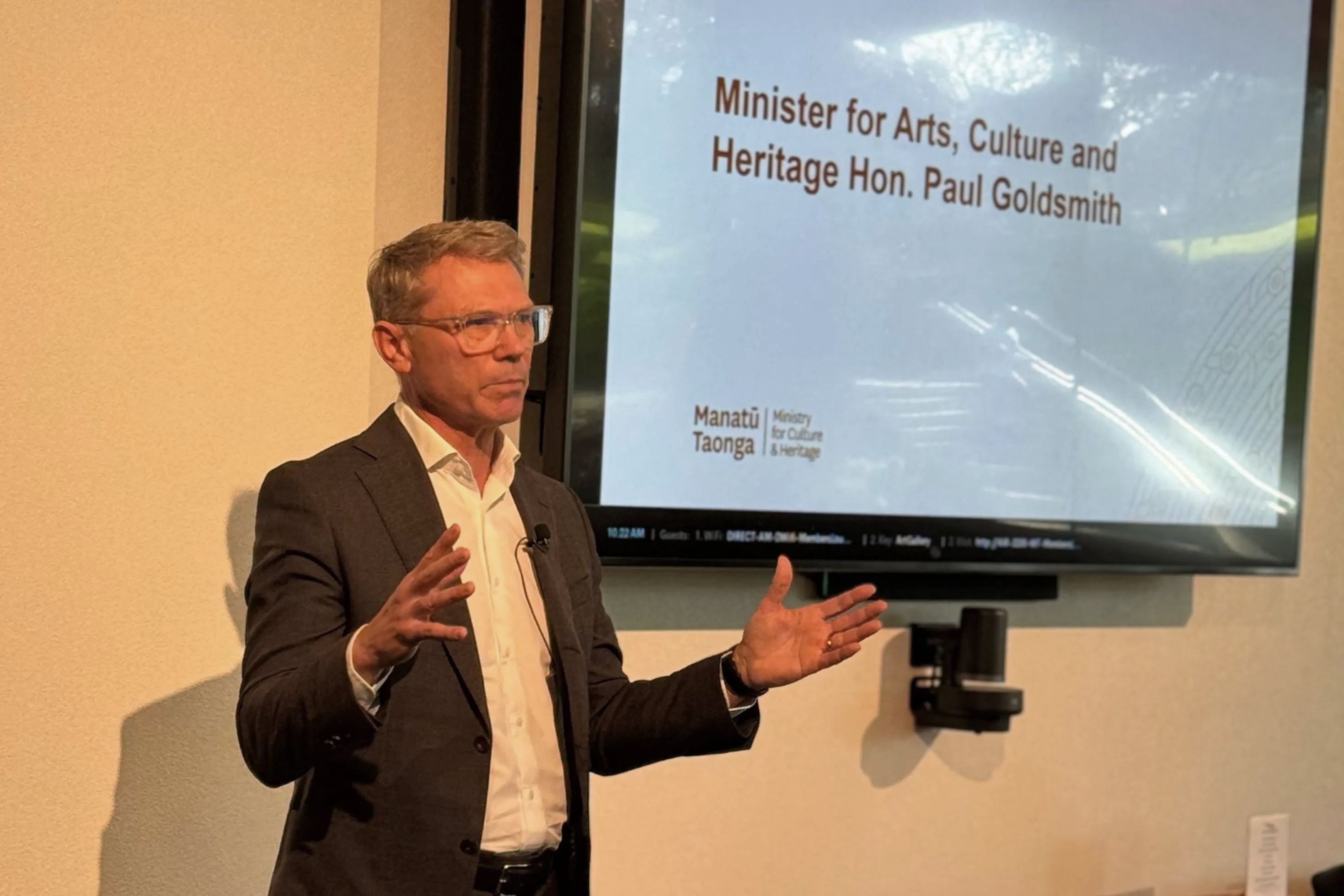
As we found out in August last year, the Amplify strategy is divided into three stages, all to be completed before 2030. This year will be about finishing off phase 1 – “implementing actions and supporting activities that can be achieved in the short-term, for example developing a cultural system evidence framework, growing creative exports through international missions, and some regulatory changes”. We’re seeing movement in all three of the listed examples – CNZ is reminding us about the Audience Atlas engagement research in a seminar this month, plenty of artists are heading overseas this year, and there’s the expectation of a revised copyright law. I suspect more projects in line with the strategy will emerge during the year.
The general election
Our general election will be held on 7 November 2026. The latest polls have Labour and Hipkins leading, BUT the current coalition would squeak back into power – that's the way MMP crumbles. There are still nine months to go and the campaigns have barely started (I have seen a couple of billboards already) so much can and will change. I’m curious to see what proposals for the arts sector different parties put forward, though I suspect they won’t be front of mind for most politicians. We may have to be pesty about it.
PANNZ Arts Market
In early March the Performing Arts Network New Zealand Arts Market will do its thing again – that combination of showcasing, networking, community building, professional development and whatever else goes on in the vaults of Aotea Centre. If you’re in the performing arts, it's framed as the place to pitch your work to delegates from here and abroad, as long as you have $825.
Aotearoa Art Fair
In April New Zealand’s dealer galleries will cluster into the Viaduct Events Centre on Auckland’s downtown waterfront and show painting, sculpture, photography, ceramics, and more. There will be bubbles, suits and canapés. Art will meet commerce and hopefully there will be sales. It will be a good pulse check of the market and what gallerists think is sellable and hot this year.
A new website for The Big Idea
A new website and new era for The Big Idea is coming next week (fingers crossed). Wow!
My radar has certainly missed things – please let me know what they are via editor@thebigidea.co.nz
💥News on the wire
New podcast on toi Māori
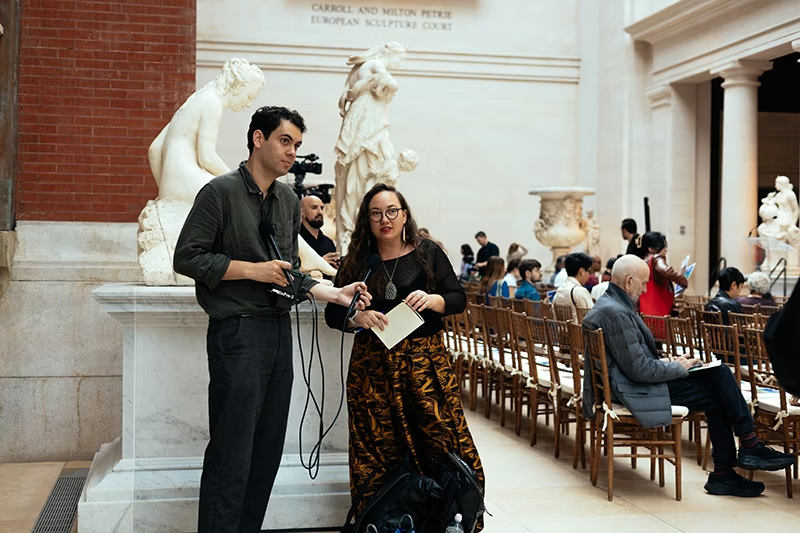
Pūtātara: Revolutions in Māori Art is an RNZ podcast launching on 23 February. It’s hosted by Matariki Williams and produced by Jamie Tahana and tells the story of how Māori art has evolved since the first Ngā Puna Waihanga hui in Te Kaha in 1973, right up to 2025. Pūtātara dives into sociopolitical contexts and examines the role of museums and galleries. It is one of three arts and culture podcasts commissioned through a Creative New Zealand, NZ On Air, and RNZ co-fund, in response to the New Mirrors research, which focused on how we might strengthen arts and culture media in Aotearoa New Zealand.
Hundreds of authors missing out on Public Lending Right payment due to admin error
When New Zealand authors have at least 50 copies of a title in New Zealand libraries they are entitled to a payment through the Public Lending Right (PLR) scheme. However, they must re-register every year, even if the books are not new. Last July, due to an administration error, 318 authors received an email confirming they were registered when they were not. These authors have missed out on their annual payments, some to the tune of thousands of dollars. The Department of Internal Affairs has told RNZ that “We have been in contact with all authors to apologise for any upset or inconvenience this has caused and advise we are considering options to put things right. Authors financially impacted by the error will receive further contact regarding next steps once decisions have been finalised”. Here’s hoping everyone gets paid what they are owed.
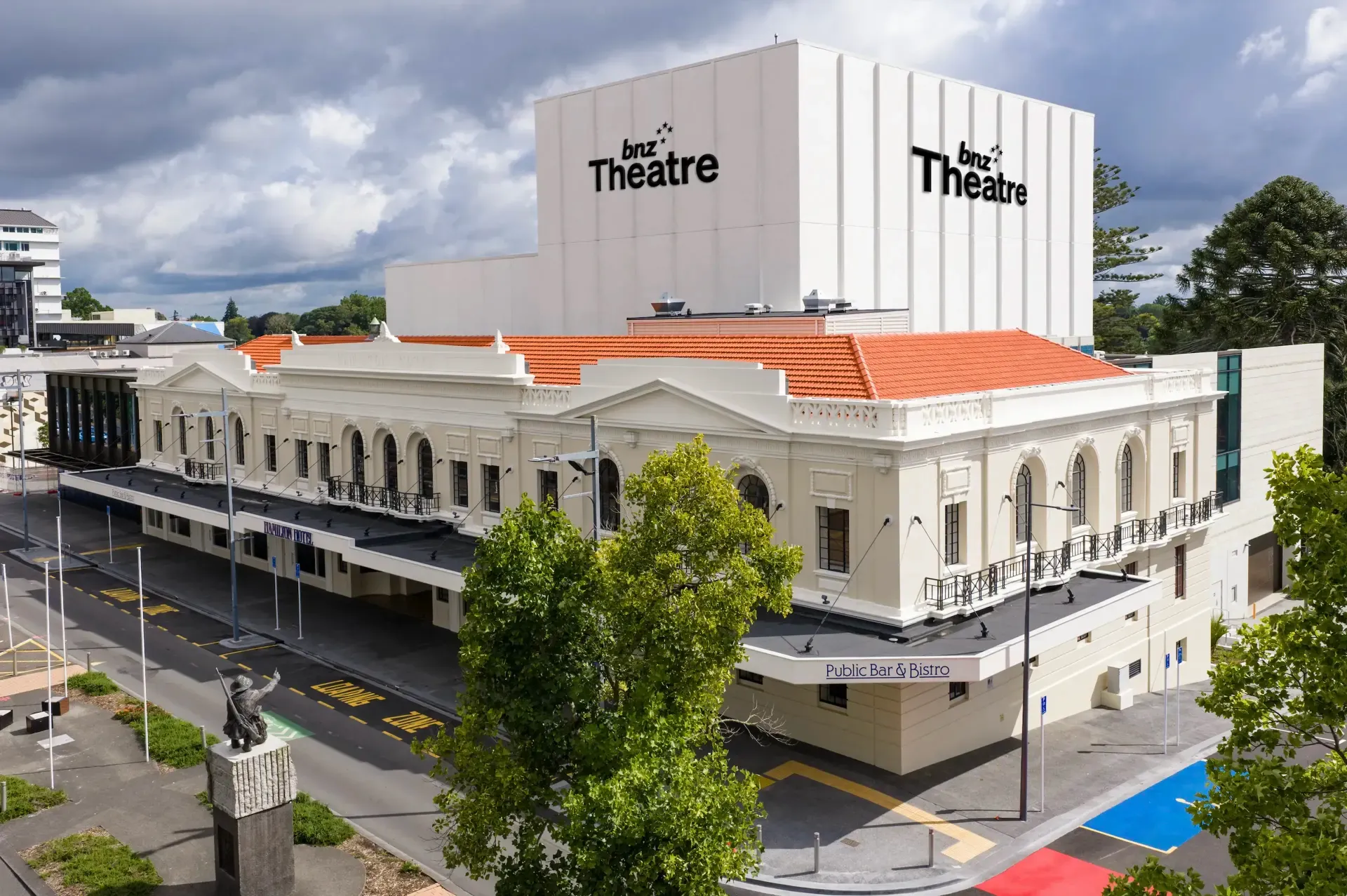
Hamilton has a new theatre
On the South End of Victoria Street, next to Embassy Park, the 1,300-capacity regional theatre finally opened on 23 January, with TEEKS taking the stage. Work on the site began in late 2021, and along the way the Waikato Regional Theatre became the BNZ Theatre. The decision to build it was angst-ridden, after the now-demolished Founders Theatre closed in 2016 due to safety concerns, it wasn’t clear whether repairs or a whole new venue would be best. Now venue manager Michael Gilling says “Acoustically, the building's beautiful… It's going to make it a bit challenging for a sound guy, because you almost don't need a sound system, it’s that good”. The theatre’s flexibility and movable seating has already been put to the test, as it has shifted from a theatre for a community production To The Stars / Ki Ngā Whetū to a concert venue for TEEKS. It also houses a large-scale Ralph Hotere mural painted for the Founders Theatre in 1973 which was kept in storage for several years and is now in the public foyer.
Aroha Awarau, journalist and playwright, has died
In mid-January Aroha Awarau died following a battle with cancer. Friends posted online that the 49-year-old slipped away peacefully at a hospice facility surrounded by love. In the performing arts, Awarau will be remembered for the day his debut play, Luncheon, scooped up Best Play at the 2014 New Zealand Script Writing Awards and for his flamboyance, creativity and knack for uplifting people’s true stories.
Ockham book awards longlist announced
44 books, selected from 178 entries, are up for an Ockham New Zealand Book Award. The awards trust chair Nicola Legat says the list is exciting. “In a difficult year for the economy and the nation, these authors and their publishers held their nerve and kept the faith, bringing brilliant books and important stories to life”. The Jann Medlicott Acorn Prize for Fiction has a $65,000 prize and each of the other main category winners will receive $12,000. The Mātātuhi Foundation Best First Book winners (for fiction, poetry, general non-fiction and illustrated non-fiction) will be awarded $3,000.
Jann Medlicott Acorn Prize for Fiction
1985 by Dominic Hoey
All Her Lives by Ingrid Horrocks
Before the Winter Ends by Khadro Mohamed
Empathy by Bryan Walpert
Hoods Landing by Laura Vincent (Ngāti Māhanga, Ngāpuhi)
How to Paint a Nude by Sam Mahon
Star Gazers by Duncan Sarkies
The Book of Guilt by Catherine Chidgey (Te Herenga Waka University Press)
The Last Living Cannibal by Airana Ngarewa (Ngāti Ruanui, Ngā Rauru, Ngāruahine) (Moa Press)
Wonderland by Tracy Farr (The Cuba Press)
Mary and Peter Biggs Award for Poetry
Black Sugarcane by Nafanua Purcell Kersel (Satupa‘itea, Faleālupo, Aleipata, Tuaefu)
Clay Eaters by Gregory Kan
E kō, nō hea koe by Matariki Bennett (Ngāti Pikiao, Ngāti Whakaue, Ngāti Hinerangi)
Giving Birth to my Father by Tusiata Avia
If We Knew How to We Would by Emma Barnes
Joss: A History by Grace Yee
No Good by Sophie van Waardenberg
Sick Power Trip by Erik Kennedy
Standing on my Shadow by Serie Barford
Terrier, Worrier: A Poem in Five Parts by Anna Jackson
BookHub Award for Illustrated Non-Fiction
Atlas of the New Zealand Wars: Volume One 1834-1864, Early Engagements to the Second Taranaki War by Derek Leask
Books of Mana: 180 Māori-Authored Books of Significance edited by Jacinta Ruru (Raukawa, Ngāti Ranginui), Angela Walhalla (Kāi Tahu) and Jeanette Wikaira (Ngāti Pukenga, Ngāti Tamaterā, Ngāpuhi)
Garrison World: Redcoat Soldiers in New Zealand and Across the British Empire by Charlotte Macdonald
Groundwork: The Art and Writing of Emily Cumming Harris by Michele Leggott and Catherine Field-Dodgson (Rongowhakaata, Ngāi Tāmanuhiri, Te Aitanga a Mahaki)
He Puāwai: A Natural History of New Zealand Flowers by Philip Garnock-Jones
Mark Adams: A Survey – He Kohinga Whakaahua by Sarah Farrar
Mr Ward’s Map: Victorian Wellington Street by Street by Elizabeth Cox
Takoto ai te Marino: Selected Works 2018-2025 by Raukura Turei (Ngā Rauru Kītahi, Taranaki, Ngāti Pāoa, Ngāi Tai ki Tāmaki), Greta van der Star, Vanessa Green and Katie Kerr
The Collector: Thomas Cheeseman and the Making of the Auckland Museum by Andrew McKay and Richard Wolfe
Whenua edited by Felicity Milburn, Chloe Cull (Ngāi Tahu, Ngāi te Ruahikihiki) and Melanie Oliver
General Non-Fiction Award
50 Years of the Waitangi Tribunal: Whakamana i te Tiriti edited by Carwyn Jones (Ngāti Kahungunu, Te Aitanga-a-Māhaki) and Maria Bargh (Te Arawa, Ngāti Awa)
A Different Kind of Power by Jacinda Ardern
An Uncommon Land: From an Ancestral Past of Enclosure Towards a Regenerative Future by Catherine Knight
Everything But the Medicine: A Doctor’s Tale by Lucy O’Hagan
Hardship and Hope: Stories of Resistance in the Fight Against Poverty in Aotearoa by Rebecca Macfie
Northbound: Four Seasons of Solitude on Te Araroa by Naomi Arnold
Polkinghorne: Inside the Trial of the Century by Steve Braunias
Ruth Dallas: A Writer’s Life by Diana Morrow
The Covid Response: A Scientist’s Account of New Zealand's Pandemic and What Comes Next by Shaun Hendy
The Hollows Boys: A Story of Three Brothers & the Fiordland Deer Recovery Era by Peta Carey
The Middle of Nowhere: Stories of Working on the Manapōuri Hydro Project by Rosemary Baird
The Welcome of Strangers: A History of Southern Māori by Atholl Anderson
This Compulsion in Us by Tina Makereti (Te Ātiawa, Ngāti Tūwharetoa, Ngāti Rangatahi-Matakore, Pākehā)
Tony Fomison: Life of the Artist by Mark Forman
The shortlist – four books in each category – will be announced on 4 March. The winners will be announced on 13 May at the Auckland Writers Festival.
👔 Human resources
Changes at Pacific Dance New Zealand
Pacific Dance NZ has had a shift in its executive team. Cilla Brown has stepped down from the Project Leader title and now shares a role, Assistant to the Director, with a new staff member, Corbyn Taulealea Huch Paselio. Corbyn brings experience as an international dance artist. Another new hire is Petronilla Su'a, who will lead the after-school community project Siva Samoa. Nilla is a graduate of UNITEC and has co-lead Pacific Dance NZ’s Te Oro Summer Holiday programme for the past two years.
👀 Further reading and watching
We are back in publishing action!
Our first story of the year was about Wairau Māori Art Gallery’s education programmes. Taking a Māori approach means Wairau shares mātauranga with rangatahi – so what do the education programmes offer them? Frances Libeau finds out.
On Tuesday we launched a new monthly feature, Global Compass. From a thawing Paris, Genista Jurgens has tracked Aotearoa artists overseas and collected up the international opportunities you don't want to miss.
Painter Tove Spary has written our first Shameless Plug for the year, touting older women artists, Bunnings test pots and your landlord’s white wall primer.
📧 Say hi!
I’m always interested to hear what readers enjoy or detest. You can catch me on editor@thebigidea.co.nz